
Search “AI advertising examples” and you get a list of famous names with no results attached: “boosted engagement”, “went viral”, and hardly ever a source, a number or a failure.
I went through twelve AI ads whose results are public. The ones that worked used AI behind one clear idea. Cadbury personalised a celebrity ad for 200,000+ small shops and won Cannes’ Creative Effectiveness Grand Prix. Klarna cut its agency spend by 25%. The ones that failed made the AI the point. McDonald’s Netherlands pulled its AI Christmas film within days. Every example below has its source linked, and the verdict is mine.
I’m an in-house AI creative director for FMCG brands, so I grade these the way a marketing director would: did the ad do the job the brief paid for? Views alone don’t count. If you would rather watch first, four AI ads I made are further down, with video.
How do you tell an AI ad that worked from a demo?
I use four tests. An ad passes when it meets all four; a demo usually fails at least two.
One message. A viewer can say what the ad was selling after one watch. Brand accuracy. The pack, the logo and the product look exactly right — 90% right is 0% usable. A business number. Savings, sales, reach or an effectiveness award, disclosed by someone with a name. Clean rights. Every face, voice and piece of footage is licensed and credited.
Which AI ads have results you can actually check?
Personalisation at scale
1. Cadbury Celebrations, “Not Just a Cadbury Ad” (Ogilvy Mumbai, India, 2021) Machine learning recreated Shah Rukh Khan’s face and voice so local shop owners could get their own version of his ad. Ogilvy says it “helped over 200,000 small stores”, and it won the Creative Effectiveness Grand Prix at Cannes Lions 2023. Verdict: worked. The celebrity was licensed and the AI multiplied a real idea.
2. Burger King, Million Dollar Whopper (Media.Monks, US, 2024) Every entrant’s custom burger got a generated image, video and jingle. Burger King reported “more than a million submissions”, and three finalists went on sale. Verdict: worked as participation. No sales figure was published.
Production engines: the quiet winners
3. Klarna, in-house image production (Q1 2024) Klarna said generative tools helped cut sales and marketing spend by 11% in a quarter and agency spend by 25%, worth about $10 million a year, and shrank its image cycle from six weeks to seven days. Verdict: worked. A disclosed company figure, not a view count.
4. Unilever, product digital twins (2025) 3D twins of Dove, Vaseline and Tresemmé packs feed generated content “twice as fast and at half the cost”, according to Marketing Dive. Verdict: worked, and it is the model closest to how an FMCG group should start.
5. Mondēlez, in-house content tool (Reuters, Oct 2025) Over $40 million invested, social content live for Chips Ahoy and Milka, and a projected 30% to 50% cut in production cost. Verdict: too early. That is a projection; the TV ads are planned for the 2026 holiday season.
Earned-media ideas
6. Heinz, “A.I. Ketchup” (Rethink, 2022) Rethink asked DALL-E 2 to draw ketchup, and the results looked like Heinz. WARC lists “over 1.15 billion earned impressions”. Verdict: worked. Here the AI proved the brand claim. It was not how the ad got made.
7. Kalshi, NBA Finals spot (PJ Accetturo with Veo 3, June 2025) Kalshi said the cost of prompting was “under $2,000” (the creator’s fee was not disclosed) and the spot passed 3 million views on X in a week. Accetturo needed 300–400 generations for 15 usable clips. Verdict: worked for a brand built on chaos. It would not survive a heritage brand’s brand book.
Which AI ads failed, and what went wrong?
8. McDonald’s Netherlands, AI Christmas film (TBWA\Neboko and The Sweetshop, Dec 2025) Pulled within days of posting after a public backlash. The production company’s CEO wrote that it took “ten people, five weeks, full-time”. Verdict: failed. A brand known for warmth made a cynical film and let the medium become the story.
9. Coca-Cola, “Holidays Are Coming” AI remakes (2024 and 2025) Both versions scored the maximum 5.9 stars with System1’s test panel, and the 2024 film was made “at a tenth” of the old cost. Online, it went the other way: CARMA measured positive sentiment falling from 23.8% to 10.2% after the 2025 launch. Verdict: split. It tested well and still spent goodwill on a beloved asset.
10. Svedka, “Shake Your Bots Off” (Super Bowl LX, Feb 2026) The first Super Bowl ad made primarily with AI. The brand called it a conversation starter; Gartner’s Nicole Greene said “Svedka missed the moment.” Verdict: failed. Being first to do it was the whole idea, and that was not enough.
11. Toys“R”Us, “The Origin of Toys“R”Us” (Native Foreign with Sora, June 2024) A one-minute brand film generated almost entirely with Sora in a few weeks. It drew heavy criticism, and no performance data was ever shared. Verdict: demo.
12. Under Armour, “Forever Is Made Now” (Wes Walker, March 2024) Built from existing assets and a 3D model of Anthony Joshua. A director then showed that the athlete footage came from an earlier shoot that was not credited; credits were added later. Verdict: failed on rights, which is now part of the creative job.
The AI ads with checkable results used the tool behind the idea: to personalise, to version, to cut cost. The ones that were pulled or panned put the tool in front of it. Audiences seem to accept an ad made with AI. They push back on an ad about AI.
Four AI ads I made, and what the AI did in each
Four of my own, so you can judge them on screen instead of on my word. For each one: what I made with AI, what I decided by hand, and the result where I have a number.
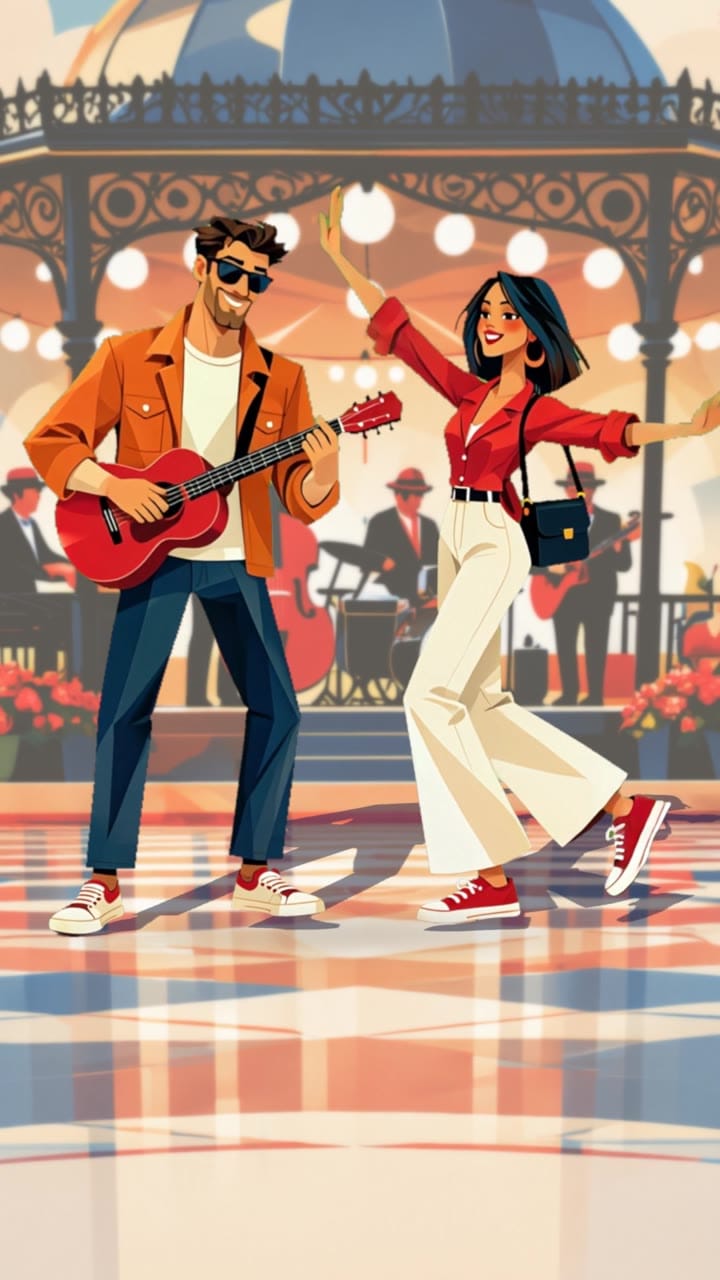
Festival Toffee · 30s
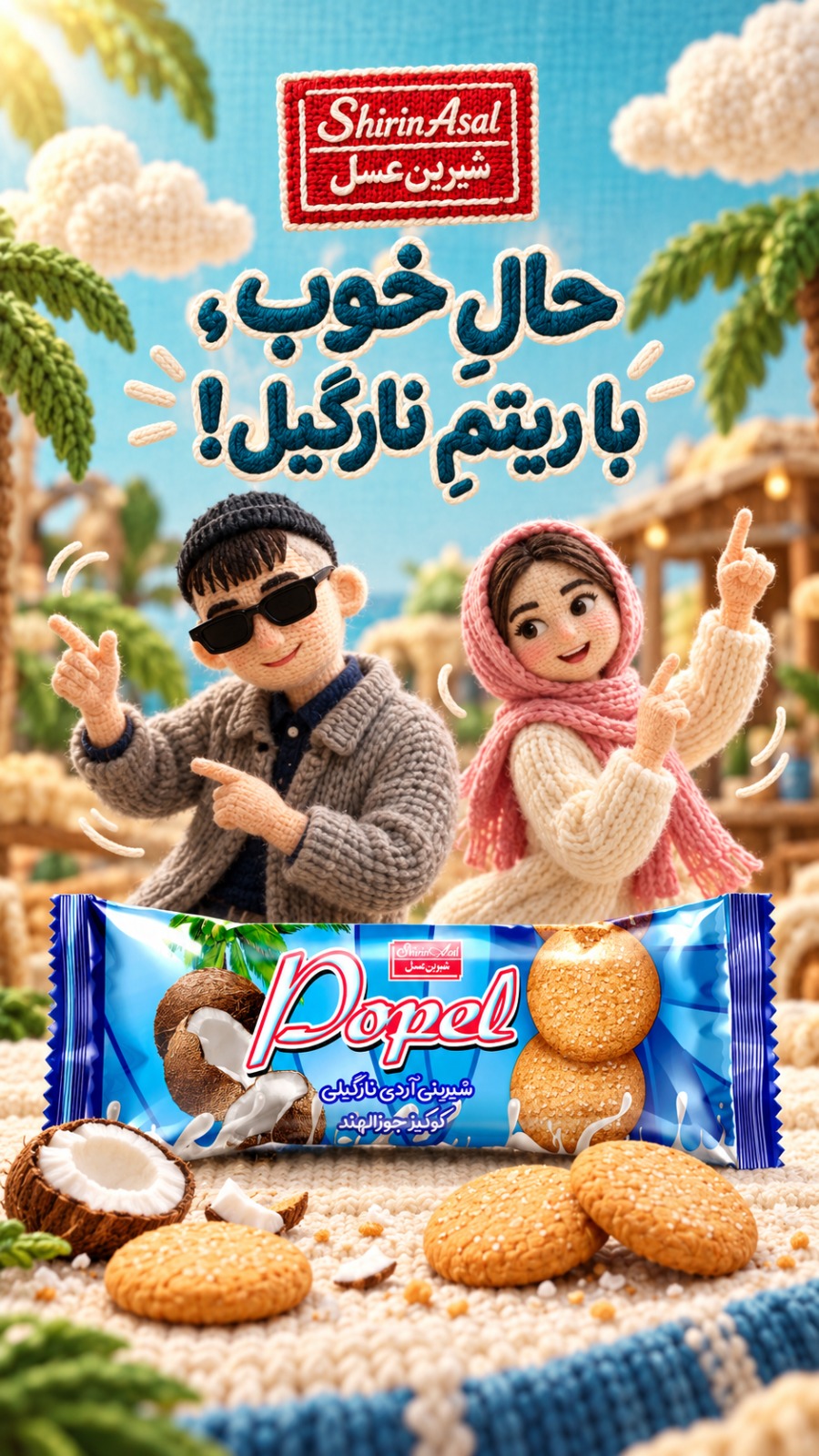
Popel · 24s

Mooo · 30s

Hit Wafers · 32s
Festival Toffee: AI-painted sets inside a 3D scene
A 30-second vertical ad for Festival Toffee by Shirin Asal, in orange and strawberry. I did the idea, the script, the character and location sheets, the art direction, the 3D, the motion and the music. My first version, modelled entirely in code as low-poly 3D, looked too simple to sell a toffee, so I rebuilt it as a hybrid: I painted the sets and the character performances with Kling from my sheets, then placed them inside a Blender scene.
Two rules made it shippable. Every camera stays where its painting was made and only pans, tilts and zooms, so the paintings never distort. And the packs keep their original artwork — the AI never redraws them. It is the Coca-Cola lesson at small scale: use the tool for the world around the product, never for the brand itself. The full process is on the Festival Toffee page.
Popel: a world knitted out of yarn
A 24-second vertical ad for Popel, Shirin Asal’s coconut cookies, set in a world where everything is knitted: the people, the pool, the palms and the clouds. My part was the characters and the world, and building every image and shot with AI. He wears a grey cardigan and beanie; she has a pink scarf and a cream knit.
The one thing that is not yarn is the pack. It stays a printed Popel pack in every shot, so the product reads at once against the soft wool around it. More on the Popel page.
Mooo Greek Yogurt: one spoon to Greece
“Greek yogurt” is a label people read past, so I took the word literally: a tired man, a first spoonful, and a very short flight to Santorini. The film is claymation-style, which reads as handmade and warm, the opposite of the clinical language a health product usually gets. I did the concept, script, art direction and AI production.
It went out as one organic post with no media spend behind it: 6,676 views from 4,942 viewers, 322 likes, 33 comments, 37 shares and 22 saves. The shares are the number I care about. They were six times what the other films in that run got. The Mooo page has the rest.
Hit Wafers: a family secret, Pixar-style
A 32-second animated short. It is an independent concept piece, not an official brand production. Two kids sneak toward the snack shelf, Dad catches them, and the “hush” turns into a secret the three of them share. I did the concept, script, character design, animation, lighting and edit, with every frame generated and directed with AI tools.
The two flavours on the pack, orange and banana, set the colour script: warm orange for the sneak, cool green for the reveal. See the Hit Wafers page.
What do my own numbers say?
Four figures from my own FMCG work. None of these films is famous, and the method behind each one can be repeated.
A 30-second appetite film went from brief to delivery in six working days, at under a fifth of a comparable traditional quote.
For one launch I cut ten openings from the same film and let performance data pick. The winner beat my own favourite.
I reject 60–70% of takes. That is the real cost of AI production, and it is why the failures above reached the public: somebody approved them.
One hero concept was localised into several language and format versions for a regional rollout, each at a fraction of a reshoot.
If you want the budget side of these numbers, I broke them down in what an AI commercial actually costs.
How do the twelve compare?
| Ad | What AI did | Public result | Verdict |
|---|---|---|---|
| Cadbury (2021) | Personalised celebrity ads | 200,000+ stores; Cannes Effectiveness GP | Worked |
| Burger King (2024) | Generated custom burgers | 1M+ submissions | Worked (participation) |
| Klarna (2024) | In-house image engine | Agency spend −25%, ~$10M a year | Worked |
| Unilever (2025) | Product digital twins | Twice as fast, half the cost | Worked |
| Mondēlez (2025) | In-house content tool | Projected −30–50% cost | Too early |
| Heinz (2022) | DALL-E as proof | 1.15B earned impressions | Worked |
| Kalshi (2025) | Generated TV spot | Prompting under $2,000; 3M+ views | Worked, brand-specific |
| McDonald’s NL (2025) | Generated film | Pulled within days | Failed |
| Coca-Cola (2024–25) | Generated remake | 5.9 stars; positive sentiment 23.8%→10.2% | Split |
| Svedka (2026) | Generated Super Bowl ad | “Missed the moment” | Failed |
| Toys“R”Us (2024) | Generated brand film | No data; backlash | Demo |
| Under Armour (2024) | AI-assisted spot | Credit controversy | Failed on rights |
Which kind of AI ad should your brand make first?
If you sell a wide range across several markets, start with a production engine — product twins and versions, the Unilever pattern. The savings are real and nobody outside your team needs to notice the AI.
If you have one launch, make one film with one idea, then cut ten hooks and let the data choose.
If you are tempted to remake a loved heritage ad with AI, don’t. Two of the biggest brands on earth tried it and paid in goodwill.
And whatever you make, never let the model draw your pack. The rest of the argument is in whether AI ads are effective at all. If you want this done for your brand, my services and process are here.
FAQ
What is the best example of AI advertising that worked?
Cadbury’s “Not Just a Cadbury Ad” (2021). Machine learning personalised a licensed Shah Rukh Khan ad for more than 200,000 local shops, and it won the Creative Effectiveness Grand Prix at Cannes Lions 2023 — a result judged on business effect, not on views.
Why did McDonald’s pull its AI Christmas ad?
McDonald’s Netherlands removed its AI-generated Christmas film within days in December 2025 after a public backlash. In my read, the tone was wrong for a warm brand, and the AI itself became the story instead of the product.
Are AI ads cheaper than traditional production?
Usually, on production. Klarna reported cutting agency spend by 25%, and in my own work a 30-second film cost under a fifth of a comparable traditional quote. The savings only hold if you keep briefing, selection and a high rejection rate — I reject 60–70% of takes.
Should AI draw the product or the pack?
No. Keep the original pack artwork and place it in the scene. In my Festival Toffee ad the sets and characters were made with AI, but the packs always use the original artwork, because a pack that is 90% right is unusable.
Sources
- Ogilvy — Cadbury “Shah Rukh Khan-My-Ad” wins Creative Effectiveness Grand Prix, 22 Jun 2023: www.ogilvy.com
- Marketing Dive — Burger King Million Dollar Whopper with Media.Monks, 8 Feb 2024: www.marketingdive.com
- Nation’s Restaurant News — Million Dollar Whopper finalists, 16 Sep 2024: www.nrn.com
- Payments Dive — Klarna cuts marketing spend with generative AI, 29 May 2024: www.paymentsdive.com
- Marketing Dive — Unilever AI bets halve production costs, 19 Mar 2025: www.marketingdive.com
- Reuters via ESM — Mondēlez generative AI tool, 27 Oct 2025: www.esmmagazine.com
- WARC — Heinz A.I. Ketchup, WARC Creative 100: www.warc.com
- NPR via KPBS — Kalshi’s AI video ad, 23 Jun 2025: www.kpbs.org
- NBC News — McDonald’s pulls AI-generated Christmas ad, 11 Dec 2025: www.nbcnews.com
- System1 — Coca-Cola “Holidays Are Coming” 2025, 20 Nov 2025: system1group.com
- Marketing-Interactive — Coca-Cola 2025 AI ad, sentiment data, 4 Nov 2025: www.marketing-interactive.com
- Marketing Week — Coca-Cola AI version of Holidays Are Coming, 3 Nov 2025: www.marketingweek.com
- Semafor — first entirely AI-generated ad at the Super Bowl, 4 Feb 2026: www.semafor.com
- Marketing Dive — Super Bowl LX ads play safe, 9 Feb 2026: www.marketingdive.com
- Decrypt — Toys“R”Us Sora film, 25 Jun 2024: decrypt.co
- TechCrunch — AI-powered Under Armour ad ignites creator controversy, 14 Mar 2024: techcrunch.com
Every figure above is quoted the way its source states it. Company figures are company claims; the verdicts are mine.
I’m Mohammad Nasravi, an in-house AI creative director making commercials for FMCG brands. Every number from my own work above comes from films that shipped, rejection rate included. Get in touch — I reply within 24 hours.