“Are AI ads effective?” is the most common question I get, and almost everyone answering it has something to sell you. Tool vendors say yes, unconditionally. Traditional production houses say no, protectively. Both answers are marketing.
I sit somewhere more useful: I’m the in-house AI creative director at a major FMCG company. I don’t sell tools, and my salary doesn’t depend on defending old production models. My work has to pass brand review, ship on real deadlines, and sit on real media budgets — and it has, repeatedly, since the first generative key visuals I made in 2022. Four years of shipping is long enough to have real scar tissue.
So here is my honest answer: AI ads are effective under specific, knowable conditions — and reliably embarrassing outside them. This article is the map of those conditions.
What does “effective” actually mean for an ad?
Before answering whether AI ads work, we have to kill a lazy definition. An ad is not effective because it looks impressive, went viral on a tech feed, or made people say “wait, that’s AI?” An ad is effective when it does what the brief paid for: stops the right audience, lands one message, builds or reinforces brand memory, and moves some commercial number — awareness, consideration, traffic, sales.
By that definition, most of what you’ve seen labeled “AI advertising” was never an ad at all. It was a demo: a capability showcase with no brand, no message discipline, and no media plan. Demos going viral tells you nothing about whether AI advertising works, in the same way a concept car tells you nothing about your commute.
The question worth asking is narrower: can AI-produced films and visuals carry a real brand’s message to a real audience at least as well as traditionally produced ones, at meaningfully lower cost and time? Four years in, my answer is yes — with conditions.
What has four years of shipping actually taught me?
My four years break into three distinct eras, and the lesson of each one still applies.
2022–2023: the key visual era. Generative imagery got good enough for campaign key visuals and social assets before video was usable. What I learned: brand accuracy is the whole game. A beautiful image with a slightly wrong pack is not 90% correct — it’s 0% usable. This is where I started building product-reference discipline, and it’s still the difference between shippable and impressive.
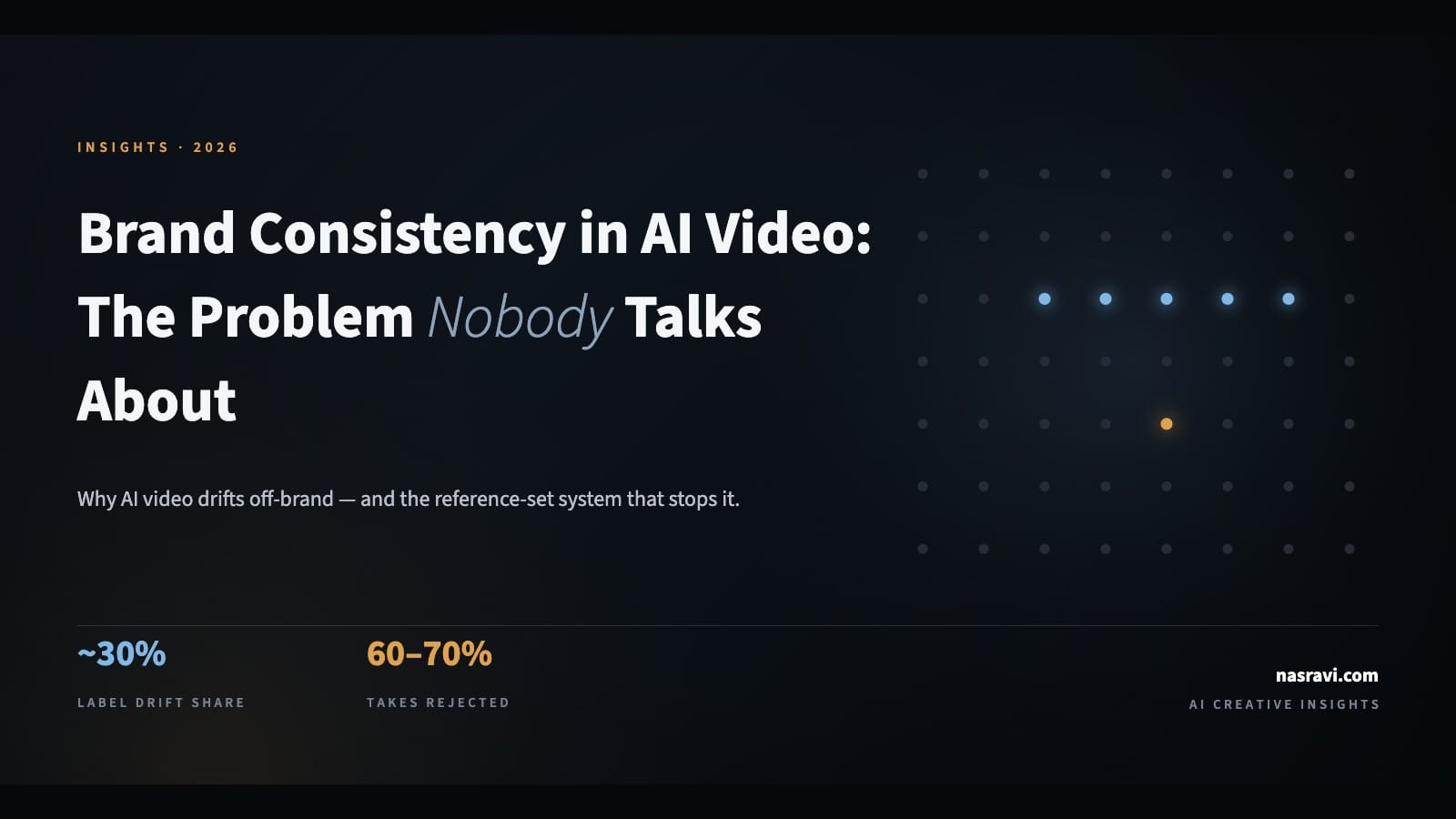
2024: the uncanny valley of video. Early AI video could produce stunning three-second miracles surrounded by melting hands and drifting labels. What I learned: never build a campaign on a highlight reel. The honest metric is not your best take — it’s your rejection rate. Mine still runs 60–70% on brand-grade work, and I now treat that as a quality system, not a flaw.
2025–2026: the cinematic era. Current-generation models produce footage that passes brand review for hero films — which is why my standard delivery is now a six-working-day pipeline with real numbers attached. What I learned: once the tools stopped being the bottleneck, judgment became the entire job. The gap between an effective AI ad and a forgettable one is no longer technical. It’s creative direction.
Here is what four years looks like in numbers I can stand behind:
| What four years of shipping looks like | Number |
|---|---|
| Years shipping AI creative for a major FMCG brand | 4 (2022–2026) |
| Typical brief-to-delivery time, 30s hero film | 6 working days |
| Typical take rejection rate on brand-grade work | 60–70% |
| Share of production time spent on judgment vs generation | ~2/3 vs ~1/3 |
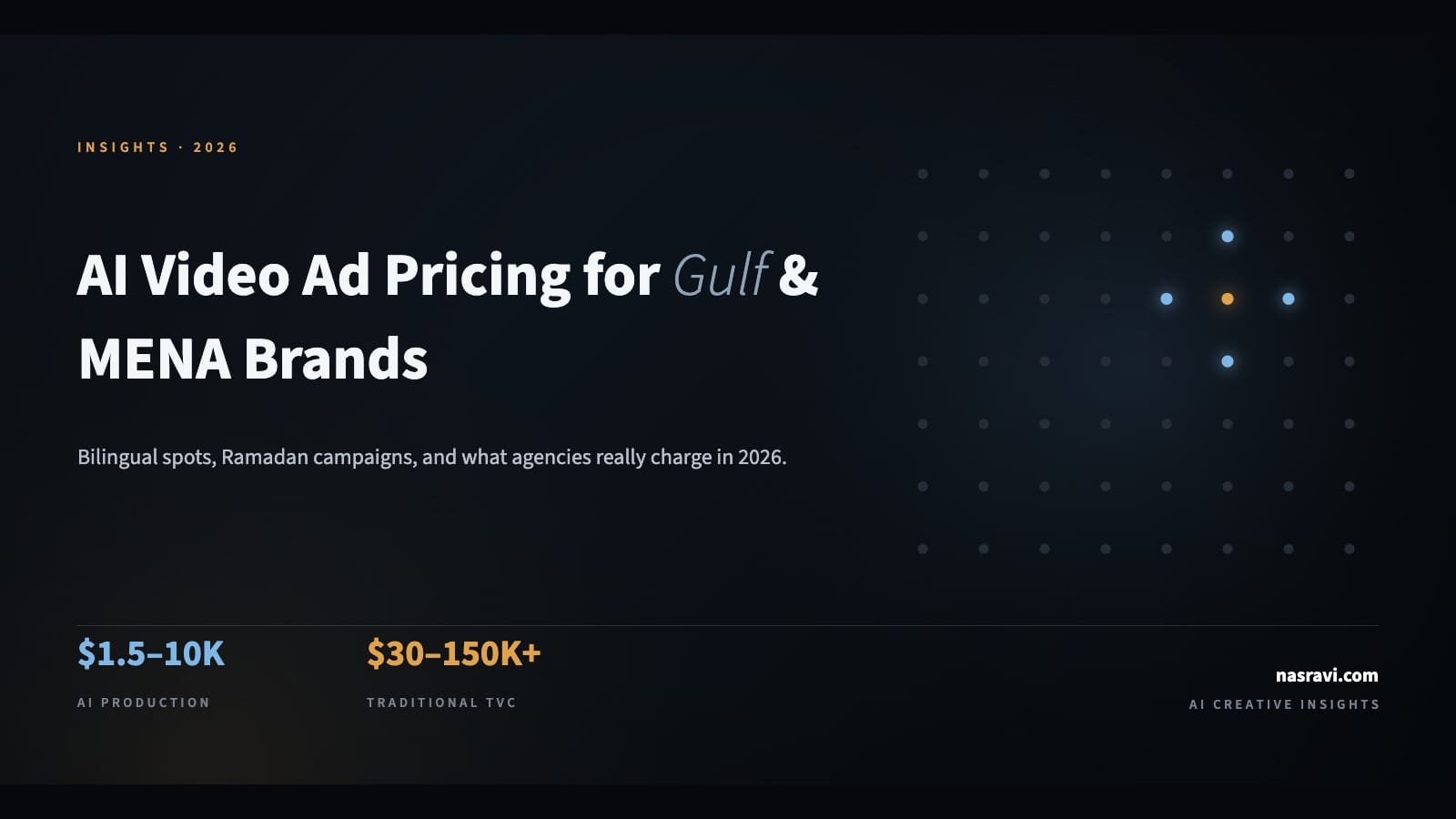
| Typical cost vs comparable traditional quote | Under one-fifth |
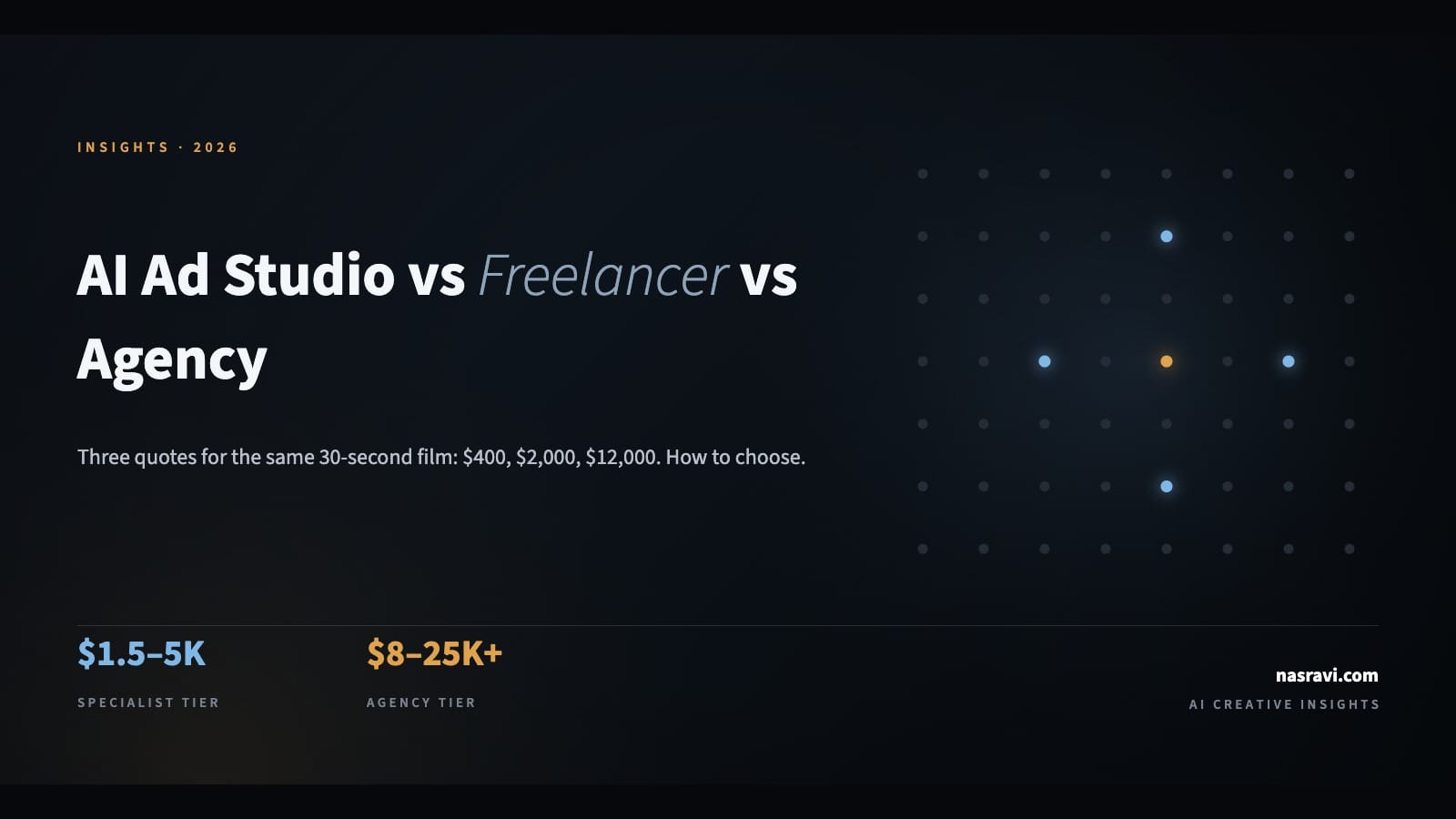
| Market rate, professional 30s AI commercial (2026) | $1,000–5,000 |
| Market rate, comparable traditional production | $4,500–50,000 |
| Structured revision rounds, typical project | 1, same-day turnaround |
Notice what’s not in that table: a claim that AI ads lift sales by some magic percentage. Anyone quoting you a universal “AI ads convert X% better” number is reading from a deck, not from experience. Effectiveness lives at the campaign level, and campaigns differ.
When do AI ads actually work?
Pattern-matching across four years of shipped work, AI ads are effective when three conditions hold.
The message survives compression. AI production rewards ads built on one clear idea — a product truth, a mood, a single moment. If your brief has one spine sentence, AI production will make it cinematic at a fraction of the cost. This covers most FMCG advertising: appetite, occasion, refreshment, seasonal emotion.
The brand system is enforced, not hoped for. Effective AI ads come from pipelines with product-reference discipline, frame-level accuracy passes, and a rejection budget. The 30–50% extra effort that strict brand work adds is exactly what makes the output an ad rather than a demo.
Speed or versions are part of the value. AI production collapses the marginal cost of variations. When a campaign benefits from ten tested hooks instead of one, or from cutdowns and formats that traditional budgets would have cut, AI ads aren’t just as effective — they’re more effective, because testing beats guessing. This is the quiet advantage nobody puts in showreels.
When do AI ads flop?
Symmetry demands the failure list, and mine is specific.
They flop when the concept was weak — faster production of a bad idea just means you fail sooner. They flop on precise human interaction and long performance takes: hands opening wrappers, sustained dialogue to camera, real product demonstrations with exact physics. I budget extra for these shots or design around them, and I say so openly. They flop when the audience feels deceived — an ad that reads as “cheap AI” damages the brand it was meant to build, which is why selects and craft matter more, not less. And they flop when teams ship the drift: label inconsistencies and continuity breaks that a demo audience forgives and a brand audience does not.
None of these are arguments against AI advertising. They’re arguments against doing it carelessly — the same way bad lighting was never an argument against cameras.
So should your brand use AI ads in 2026?
If you’re in FMCG, food and beverage, DTC, or any category where the product and the mood carry the message: yes, and the economics are not close. You get cinematic quality in days, versions for testing, and same-day revisions, at under a fifth of traditional cost. The condition is that you buy judgment, not just generation — a director who rejects 70% of takes, holds your pack accurate to the millimeter, and tells you which shots AI still can’t do.
If your campaign depends on celebrity performance, live product demonstration, or documentary authenticity — use traditional production, or a hybrid. I’ve turned down exactly this kind of work, and I’d rather tell you that in the first conversation than discover it on your budget.
That’s the whole answer. Not “AI ads work” or “AI ads don’t” — but AI ads work when directed like ads, and fail when treated like demos. Four years in, I’ve watched both happen enough times to know the difference is never the tool.
If you want the working-when-directed version for your brand, my services and pricing are public — spot, campaign, and retainer, with real numbers.
FAQ
Are AI ads effective for brand advertising, or only for cheap performance content?
Both, if directed properly. Current-generation AI video passes brand review for cinematic hero films, not just social filler. The requirement is a pipeline that enforces brand accuracy — pack, palette, tone — at the frame level, which is creative direction work, not tool work.
Do audiences trust ads made with AI?
Audiences distrust bad ads. When craft is high and the brand is accurate, viewers judge the ad, not the production method. Where trust breaks is visible sloppiness — drift, uncanny hands, texture that feels off. That’s a quality-control problem, and it’s solvable.
How do you measure whether an AI ad worked?
The same way as any ad: against the brief’s commercial goal — awareness, consideration, traffic, sales — plus production metrics traditional ads can’t offer, like number of versions tested and revision turnaround. I don’t publish universal conversion claims, because honest effectiveness data is campaign-specific.
What’s the biggest mistake brands make with their first AI ad?
Treating generation as the work. The tools are the cheap third of the job; the expensive two-thirds is the brief, the storyboard, the selects, and the accuracy passes. Brands that skip judgment get demos. Brands that buy judgment get ads.
I’m Mohammad Nasravi — in-house AI creative director at a major FMCG company. Everything in this article comes from work that actually shipped, rejection rates included. If you’re weighing AI production for your brand, see my services and pricing or get in touch — I reply within 24 hours.